What Is Inbound Marketing? (Simple Guide for Beginners)

Most people who fail at online marketing are not failing because they lack effort. They are failing because they are using the wrong type of marketing — the kind that interrupts people instead of helping them.
I learned this the hard way. Back in 2021 and 2022, when I was just starting out from Dinajpur, Bangladesh, I was pushing products at people who had no interest in them. Cold promotions on Facebook. Random CPA links with zero strategy. I thought if I showed my offer to enough people, some of them would bite. They did not. The approach was exhausting, expensive, and it did not work.
Then I discovered inbound marketing — and everything changed. It is the reason I now run a content-driven business through Maxbe Marketing and why cpabishojit.com gets consistent organic traffic without me paying for a single ad. In this guide, I am going to break down exactly what inbound marketing is, how it works, why it beats traditional advertising in the long run, and how you can start using it even if you have zero budget and zero experience.
What Is Inbound Marketing?
Inbound marketing is a strategy where you attract customers to you — by creating content that helps them — instead of chasing them with ads and cold messages.
That is the clearest one-line definition I can give you. But let me make it even more concrete.
Think about the last time you searched Google for “how to start a blog” or “best phone under $200.” You typed in a question, and the internet gave you an answer. The websites that answered your question were doing inbound marketing. They did not send you a cold message. They did not pay to put a banner ad in your face. They simply created helpful content that showed up when you were already looking for information.
That is the core idea. Inbound marketing is about being in the right place, with the right content, at the exact moment when someone is searching for answers related to what you offer.
The term was popularized by HubSpot, and it stands in direct contrast to “outbound marketing” — which is the traditional approach of pushing messages out to a broad audience through TV ads, billboards, cold calls, and interruptive digital ads. Outbound says, “Let me interrupt you to tell you about my product.” Inbound says, “Come find me when you are ready — I will be here with something valuable.”
Inbound Marketing vs. Outbound Marketing: What Is the Real Difference?
Understanding this difference is the foundation of everything. If you get this wrong, you waste money and time. I did exactly that in my early days.
Outbound marketing works by broadcasting a message to as many people as possible and hoping some of them are interested. A Facebook ad shown to 10,000 random people. A cold email sent to a purchased list. A TV commercial during a primetime show. The audience did not ask for that information. You interrupted their day and hoped it resonated.
Inbound marketing works the opposite way. A person types a question into Google. They watch a YouTube video to learn something. They follow an account on Instagram that consistently posts useful content. In every case, the person is already interested. They came to you. You did not chase them.
Research suggests that inbound leads cost, on average, 63% less per lead than outbound leads. That number makes sense when you think about it — you are reaching people who are already in the mindset of learning or buying, rather than cold-approaching a random audience and hoping for the best.
This is why, when I switched my focus to inbound strategies — especially SEO and content marketing — my results improved dramatically. I stopped throwing money and energy at people who did not care. I started building content that answered real questions. The traffic that came in was slower to build, but it was far more valuable because it was made up of people who were genuinely interested.
The Three Stages of Inbound Marketing (And Why Each One Matters)
Inbound marketing is not a single tactic. It is a full process with three distinct stages. HubSpot calls this the “flywheel model,” but I like to think of it in simpler terms: attract, engage, and delight. Each stage has a specific purpose, and skipping any one of them breaks the whole system.
The Attract Stage
This is where you pull people in. You create content that answers the questions your ideal audience is already searching for. This content shows up in Google search results, on YouTube, on social media, and on any platform where your audience spends time looking for information. The goal here is not to sell anything yet. The goal is to be genuinely useful.
The main tools in the attract stage are blog posts optimized for SEO, YouTube videos, social media content, and podcasts. I focus heavily on blog content and YouTube because those are the two channels where people go to find answers to specific questions. If you write a blog post that ranks on page one of Google for a question your target reader is asking, you will get consistent organic traffic every single day without spending a cent on ads.
The Engage Stage
Once someone finds your content and trusts you, the next step is to deepen that relationship. This is where you move from being a stranger on the internet to being someone they actually want to hear from. Email lists are the most powerful tool here. When someone subscribes to your email list, they are literally giving you permission to show up in their inbox — that is a huge level of trust.
The engage stage is also where lead magnets (free resources you offer in exchange for an email address), webinars, in-depth guides, and email sequences come in. The goal here is to continue being helpful while building a genuine relationship. You are not selling yet — you are deepening trust.
The Delight Stage
This is the stage most beginners completely ignore, and it is one of the most powerful stages of all. The delight stage happens after someone becomes a customer. It means you continue to serve them so well that they become loyal fans who recommend you to others.
A delighted customer does not just buy from you once. They come back. They leave reviews. They tell their friends. They share your content. This organic word-of-mouth is the most powerful marketing that exists — and it costs nothing. Inbound marketing is not a one-time campaign. It is a system that keeps working and compounding over time.
The Main Channels and Tactics Used in Inbound Marketing
Inbound marketing is not one single thing you do. It is a combination of channels that work together to attract and engage the right audience. Here is a breakdown of the most important ones and how they actually work in practice.
SEO and Blog Content
This is the backbone of inbound marketing, and it is my personal strongest skill. SEO (Search Engine Optimization) is the practice of creating content that ranks high in search engines like Google when people search for related topics. Research shows that 53% of all website traffic comes from organic search — meaning more than half of all web traffic comes from people typing questions into search engines, not from ads.
A well-written blog post that ranks on Google can bring in hundreds or thousands of visitors every single month for years, without any ongoing cost. That is the power of SEO-driven inbound marketing. I cover SEO strategy in full detail in separate guides on this site — it is a deep enough topic to deserve its own dedicated content.
YouTube and Video Content
YouTube is the world’s second largest search engine. People go there not just to be entertained but to learn things. How-to videos, tutorials, product reviews, and educational content all perform exceptionally well on YouTube as inbound marketing tools. Studies indicate that 72% of customers prefer learning about a product or service through video rather than text. If you are not creating video content alongside your written content, you are leaving a major traffic channel untapped.
Social Media Content
Social media platforms like Instagram, LinkedIn, Facebook, and Pinterest serve as discovery channels. When you consistently post useful, engaging content, people who have never heard of you before will come across it — and some of them will follow you, visit your website, and eventually become customers. Social media is especially powerful at the top of the funnel, meaning it is great for brand awareness and attracting new people to your world.
Email Marketing
Email is where relationships are built and conversions happen. Once someone gives you their email address — usually in exchange for something valuable, like a free guide or a checklist — you have a direct line of communication with them. Automated email sequences that nurture leads have been shown to increase conversions by over 400% compared to no follow-up at all. Email is not an old-school tactic. It is still one of the highest-ROI tools in any inbound marketing system.
Lead Magnets and Opt-in Offers
A lead magnet is a free resource you offer in exchange for someone’s email address. It could be a PDF guide, a checklist, a free mini-course, a template, or anything else that genuinely helps your target audience. The key word is “genuinely.” A bad lead magnet that promises something and delivers nothing will destroy trust faster than you can build it. A great lead magnet solves a real, immediate problem — and it makes people think, “If the free stuff is this good, the paid stuff must be incredible.”
Why Inbound Marketing Works Especially Well for Beginners and Small Budgets
Here is something I want to say directly, because I know many of my readers are in a similar situation to where I was — limited budget, small town, big ambitions.
Inbound marketing is one of the most level playing fields that exists in business. It does not care where you are from. It does not require a big advertising budget. It does not require a US-based audience or an office in a major city. What it requires is knowledge, consistency, and patience — and all three of those are free.
When I started cpabishojit.com in 2021 from a small town in Bangladesh, I had essentially no money to spend on ads. I could not compete with big businesses on paid advertising. But I could write. I could learn SEO. I could create content that answered questions people were actually searching for. And over time, that compounded into real, consistent organic traffic.
Research suggests that companies using inbound marketing for one year or more see their customer acquisition cost drop by an average of 38%. That compound effect is the whole game. The first few months feel slow. But by month 6, 12, or 24, you have built an asset — a library of content — that keeps working for you even when you are not actively working on it.
This is fundamentally different from paid advertising. When you stop paying for ads, the traffic stops immediately. When you have a blog post ranked on page one of Google, it keeps bringing traffic whether you are awake, asleep, studying for exams, or running other parts of your business. That is the kind of leverage that changes everything.
The Inbound Marketing Funnel: How Strangers Become Customers
Understanding the buyer’s journey is critical to making inbound marketing work. Not everyone who finds your content is ready to buy right now. People move through different stages — and your content needs to serve them at each stage.
The standard model breaks this into three stages: awareness, consideration, and decision. I find it easier to think of it as: “they have a problem,” “they are comparing solutions,” and “they are ready to choose.”
At the awareness stage, someone realizes they have a problem or a question. They search for information. Your blog post or video shows up. They read it or watch it, get value, and maybe follow you or subscribe. At this stage, you are not selling anything. You are building familiarity and trust.
At the consideration stage, that same person is now actively looking at different solutions. This is where comparison content, case studies, in-depth guides, and email sequences come in. You are showing them that your approach or your product is the right fit for their specific situation.
At the decision stage, they are ready to buy or take action. This is where clear calls to action, strong landing pages, testimonials, and direct offers work best. The person already knows and trusts you — now you just need to make it easy for them to take the next step.
The reason inbound marketing is so powerful is that by the time someone reaches the decision stage, they feel like they already know you. They have been reading your content, watching your videos, or receiving your emails for weeks or months. That trust is worth far more than any ad you could run.
Common Mistakes Beginners Make with Inbound Marketing
I made most of these mistakes myself, so I am not judging — I am just saving you the time and frustration.
The biggest mistake is expecting fast results. Inbound marketing, especially SEO-based inbound, takes time. The organic traffic does not show up overnight. Most blogs see meaningful traffic growth after 6 to 12 months of consistent publishing. If you quit after 2 months because nothing is happening, you will never see the compounding results. Consistency over a long time period is non-negotiable.
The second biggest mistake is creating content for yourself instead of for your audience. I see this constantly — people write about what they want to say rather than what their audience is actually searching for. Before you write a single word, you need to understand what questions your target reader is typing into Google. Tools like Google Search Console, Ahrefs, or Semrush help you find real search queries with real search volume. Write content that answers those specific questions.
Another common mistake is ignoring the “engage” and “delight” stages and only focusing on attracting traffic. Traffic alone does not build a business. If you bring 10,000 people to your website but have no email list, no follow-up sequence, and no relationship-building mechanism, most of those people will leave and never come back. Build a system to capture and nurture leads from day one.
Finally, many beginners create inconsistent content — a burst of posts, then silence for months, then another burst. Search engines reward consistent, ongoing publishing. Your audience also expects regularity. Pick a publishing schedule you can actually maintain and stick to it. Two quality posts per month, published consistently for a year, will outperform ten posts published in January followed by nothing for eleven months.
How to Start Your Own Inbound Marketing Strategy (Step by Step)
Here is a practical starting framework that works even if you have no team, no budget, and you are doing everything yourself.
The first step is to define exactly who you are trying to reach. Be specific. “People interested in marketing” is not a target audience. “First-time freelancers in South Asia who want to earn money online but do not know where to start” is a target audience. The more specific you are, the easier everything else becomes — because you know exactly what questions they are asking and what problems keep them up at night.
The second step is to research the questions your audience is actually searching for. Use Google’s autocomplete feature, look at the “People Also Ask” section on Google search results, and if you have access to a tool like Ahrefs or Semrush, use those to find keywords with real search volume. Every piece of content you create should be answering a specific question your audience is searching for.
The third step is to choose your primary content channel and commit to it. I recommend starting with a blog because written content is the most versatile — it can be repurposed into social media posts, video scripts, email newsletters, and more. But if you are more comfortable on camera, YouTube is an equally strong choice. The key is to pick one channel, master it, and build consistently before adding more channels.
The fourth step is to build an email list from day one. Even if your site is brand new, add an opt-in form and create a simple lead magnet. An email list is an asset that you own — unlike social media followers, which can disappear overnight if a platform changes its algorithm.
The fifth step is to measure and optimize. Use Google Analytics and Google Search Console (both are free) to understand which content is getting traffic, where your audience is coming from, and what they are doing when they arrive. Use that data to create more of what works and improve what is not performing.
Frequently Asked Questions About Inbound Marketing
What is the difference between inbound marketing and content marketing?
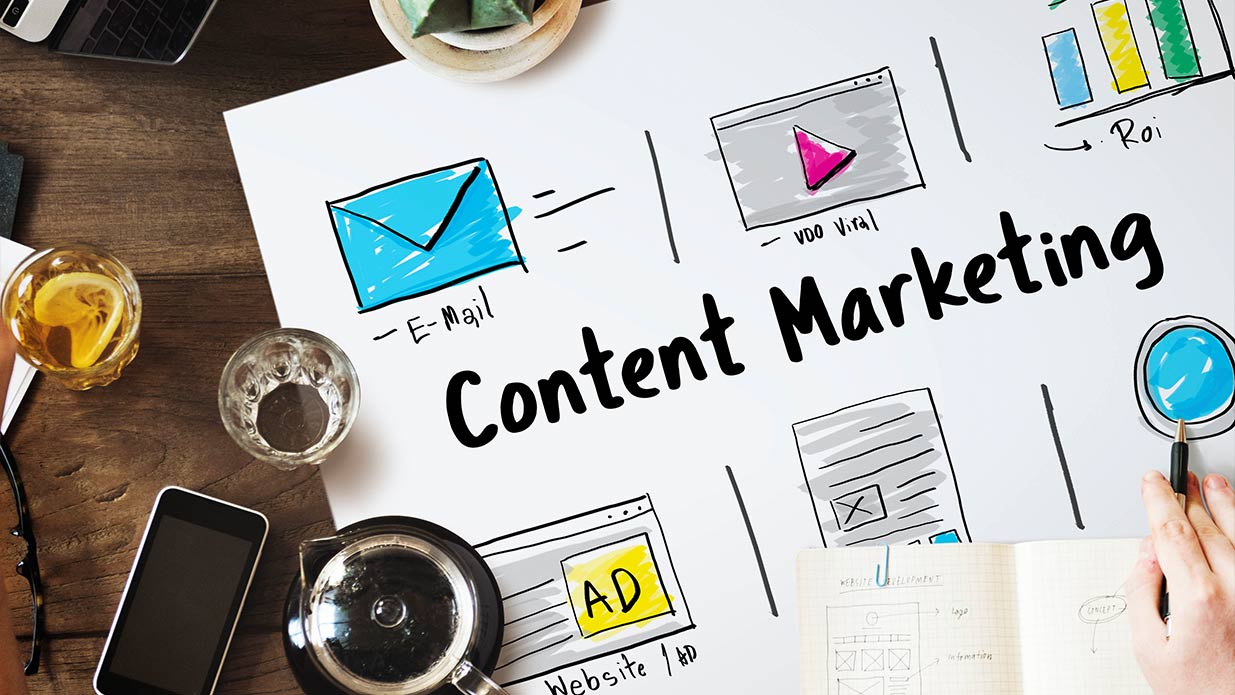
Content marketing is one component of inbound marketing — it refers specifically to creating and distributing valuable content like blog posts, videos, and infographics. Inbound marketing is the broader strategy that includes content marketing, SEO, email marketing, social media, and lead generation all working together to attract, engage, and convert customers. Think of content marketing as one powerful tool inside the larger inbound marketing toolbox.
How long does inbound marketing take to show results?
Inbound marketing, especially when it relies on SEO and organic traffic, typically takes 6 to 12 months before you see meaningful results. This is because search engines need time to crawl, index, and rank your content. Social media and email marketing can show results faster, but the compounding benefits of inbound marketing — where your content keeps driving traffic and leads long after you publish it — take consistent effort over several months before they become significant.
Can I do inbound marketing with no budget?
Yes, absolutely. This is one of the biggest advantages of inbound marketing. You can start a blog for free using platforms like WordPress.com or Blogger. You can create a YouTube channel for free. Google Search Console and Google Analytics are free. Writing and publishing SEO-optimized content costs nothing except your time and effort. Paid tools like Ahrefs or Semrush are helpful but not required when you are just starting out.
What is the best type of content for inbound marketing?
The best content is the content that directly answers the questions your target audience is already searching for. In terms of format, research suggests that how-to articles and in-depth guides perform best for attracting organic search traffic, while short-form videos perform best for social media awareness. Over time, a combination of blog posts, videos, and email newsletters creates the strongest inbound marketing ecosystem.
Is inbound marketing better than paid advertising?
For long-term results, inbound marketing typically outperforms paid advertising in terms of ROI — primarily because the content you create keeps working over time without ongoing cost. Paid advertising stops the moment you stop paying. That said, the two approaches work well together. Inbound builds a foundation of trust and organic traffic, while paid advertising can accelerate results in the short term and help you reach new audiences faster.
Do I need a website to do inbound marketing?
A website — especially a blog — is the most powerful foundation for an inbound marketing strategy because it is an asset you own and control. However, you can start building inbound momentum through YouTube, LinkedIn, or other platforms before you have a fully developed website. The key is to begin creating valuable content wherever your audience already spends time, and eventually direct that audience to a home base you own.
How is inbound marketing connected to SEO?
They are deeply connected. SEO (Search Engine Optimization) is the primary way that inbound blog content gets discovered by the right audience. Without SEO, even the best content sits invisible on the internet. Without quality inbound content, SEO has nothing to optimize. The two work together: SEO helps your content rank in search results, and high-quality inbound content gives search engines a reason to rank you. I cover SEO strategy in full detail in a separate guide on this site.
Final Thoughts: Inbound Marketing Is the Long Game — and It Is Worth Playing
Here is the simplest summary I can give you. Inbound marketing is about helping people instead of chasing them. It is about creating content that earns trust, builds authority, and drives consistent traffic without relying on ad spend that disappears the moment your budget runs out. The three core things to remember are: attract the right people with genuinely helpful content, engage them with value and consistency, and delight them so well that they become long-term advocates for what you do.
The hardest part is the patience. Everything in inbound marketing compounds over time — and that compounding only kicks in if you stay consistent through the early months when results feel slow. I know from experience how frustrating that period feels. But if I had quit in month three, I would never have built what I have today.
If you want help building an inbound marketing strategy for your business — content, SEO, or the full system — my agency Maxbe Marketing does exactly that. And if you want to keep learning, I go deep on SEO, affiliate marketing, and content strategy on my YouTube channel — search @cpabishojit and you will find everything there.
One question before you go: right now, what is the single biggest thing stopping you from publishing your first piece of inbound content — is it not knowing what to write about, not knowing how to optimize it, or something else? Tell me in the comments below.